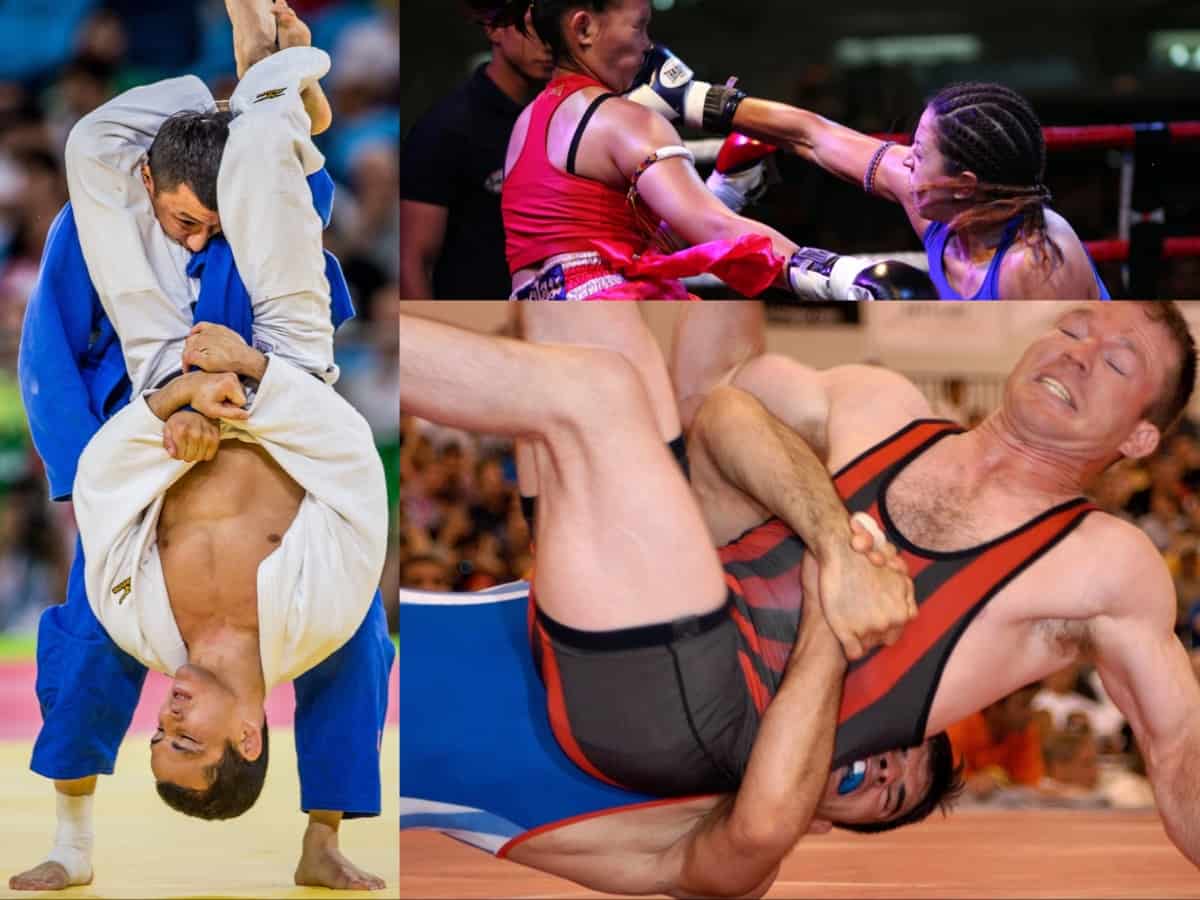
Does MMA Have A Belt System? Quickly Explained

Since mixed martial arts (MMA) combines techniques from various martial arts, many people assume it must have a belt ranking system, like karate or taekwondo. However, MMA does not have a universal colored belt system.
Some MMA schools have their own belt systems to track students’ progress. Those belts can have meaning within the school, but they don’t carry a universally recognized rank in MMA.
Competition is the clearest way to assess how well someone can apply their skills in an MMA fight. Below, I’ll explain what an MMA black belt means and how it compares with black belts in individual martial arts.
Can You Get a Black Belt in MMA?
You may come across a school that offers a black belt in MMA. In that case, the belt just means that you’ve met that school’s requirements, nothing more. It doesn’t automatically give you the same rank at another school. For competitive fighters, performance in fights and an official fight record give a clearer picture of their ability. A record alone doesn’t tell the whole story, though—who you’ve fought and how you’ve performed matter too. If you don’t compete, your coach can still assess your progress in training, even if you haven’t tested those skills in a match.
How Long Does It Take to Get a Black Belt in MMA?
There’s no standard timeline. If your school offers an MMA black belt, the time it takes will depend on its requirements and your progress. Ask your coach what the belt represents and what you need to do to earn it.
Is There an Easy Black Belt to Get?
This also raises a broader question about the martial arts people train in alongside MMA: is there an easy black belt to get? I wouldn’t choose a martial art just because its black belt seems quicker to earn. A shorter timeline doesn’t necessarily mean the training is easier.
The number of techniques isn’t the whole story either. Even a single technique can take a great deal of practice/repetition to use well against someone who is resisting you.
Every martial art has its own requirements, and every school has its own approach to grading. That makes it difficult to call one black belt the easiest.
Whatever martial art you choose, earning a black belt takes time and effort. It makes more sense to choose something you want to keep learning than to look for the quickest belt.
Why Does It Take So Long to Get a Black Belt in BJJ?
Brazilian jiu-jitsu (BJJ) is one example of why a black belt can take many years to earn. You need time to learn the techniques, understand how they connect, and more trials and errors to apply them against resisting training partners. Knowing a move and being able to apply it consistently are two different things.
The timeline depends on how often you train, your progress, and your instructor’s promotion standards. Taking longer doesn’t necessarily mean BJJ is harder than every other martial art. It means you need time to meet the requirements for that rank.